Lumber tarps, specified in writing before you pay
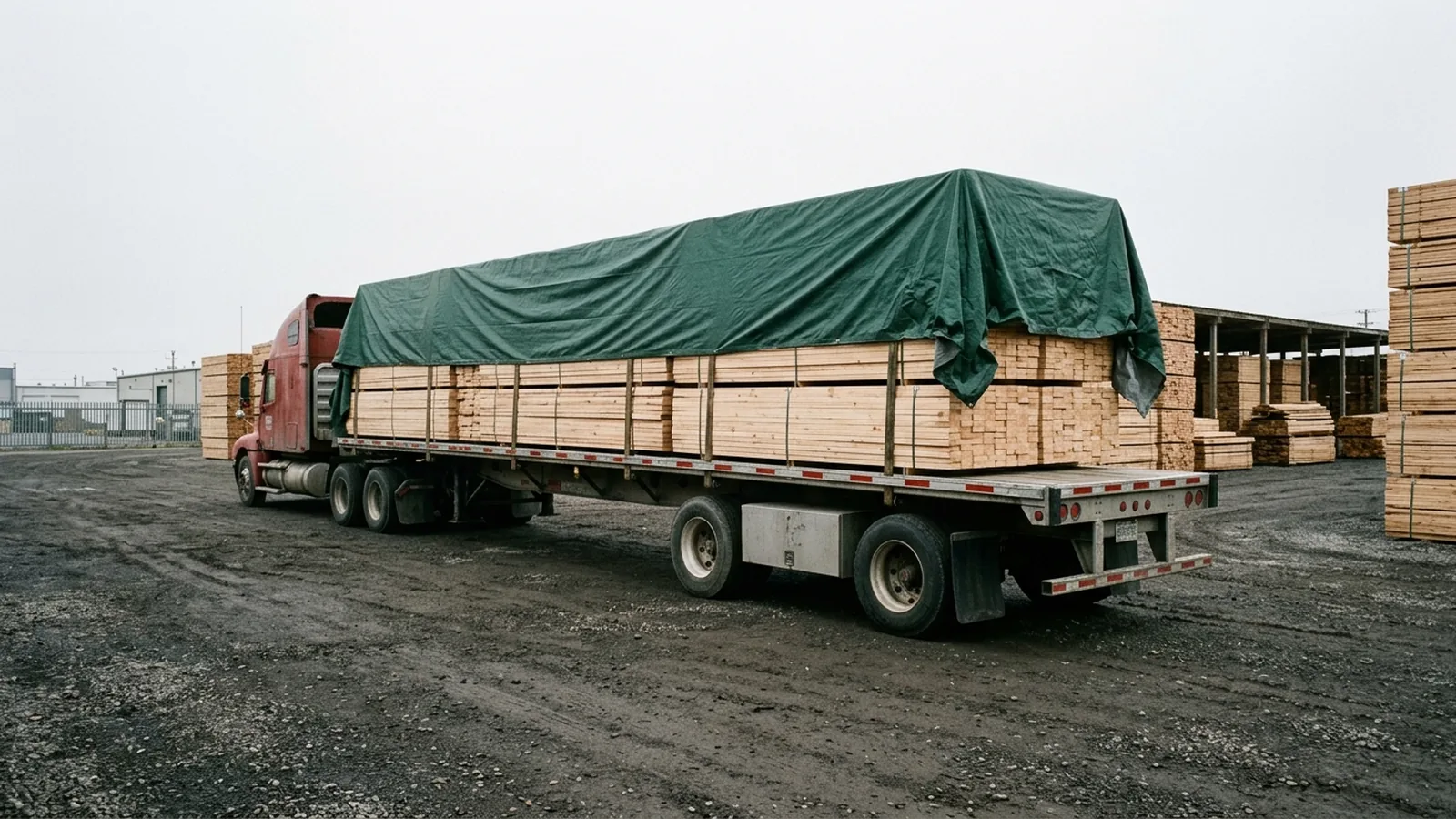
What must be on the written spec
- Fabric weight (the 16 oz vs 18 oz trap)
- Drop height, 6 ft vs 8 ft
- End flap placement
- Grommet density
- Reinforcements and panel seams
- D-ring rows
Published lumber tarps sizes
US retail listings, read 2026-08-20. The prices below are market references, not our prices or available stock. Each size links to its source and the specification to confirm before a custom order.
| Format | Drop | Fabric | Published price | |
|---|---|---|---|---|
| 16 x 28 ft, 4 ft drop | 4 ft | 18 oz | from 329.99 USD | View 16 x 28 ft, 4 ft drop → |
| 20 x 18 ft, 6 ft drop | 6 ft | 18 oz | 272.00 USD | View 20 x 18 ft, 6 ft drop → |
| 20 x 27 ft, 6 ft drop flap | 6 ft | 18 oz | 299.95 USD | View 20 x 27 ft, 6 ft drop flap → |
| 20 x 28 ft, 6 ft drop | 6 ft | 18 oz | from 384.99 USD | View 20 x 28 ft, 6 ft drop → |
| 24 x 18 ft, 8 ft drop | 8 ft | 18 oz | 349.99 USD | View 24 x 18 ft, 8 ft drop → |
| 24 x 28 ft, 8 ft drop | 8 ft | 18 oz | from 399.99 USD | View 24 x 28 ft, 8 ft drop → |
| 24 ft 6 in x 27 ft, 8 ft drop | 8 ft | 18 oz | 319.95 USD | View 24 ft 6 in x 27 ft, 8 ft drop → |
| 28 x 28 ft, 10 ft drop | 10 ft | 18 oz | 679.00 USD | View 28 x 28 ft, 10 ft drop → |
Formats and prices published by US retailers, read on 2026-08-20, and shown as market reference: we hold none of them in stock. Factories cut custom dimensions to order. We quote only against a written dimension sheet: flat size, drop and flap placement. A missing dimension gets asked, never filled in.
US retail price anchors
| What | Published price | Source |
|---|---|---|
| 20x27, 18 oz, 6 ft drop | 299.95 USD, 254.96 USD at 25+ | N2 · Tarps Now, 2026-08-16 |
| 20x27 range | 274.99 to 304.99 USD | N2 · Mytee, extracts read 2026-08-16 (site blocks full fetch) |
| 20x28 | 384.99 USD | N2 · US Cargo Control, 2026-08-16 |
Anchors for budgeting, read on 2026-08-16. They are published US retail prices, not our quotes: a sourcing quote depends on spec, quantity, freight and duty, and is documented in writing.
Which fabric construction should a fleet compare?
Start with the loads, handling routine and service conditions. A fabric weight tells you mass per area; it does not describe every panel, the coating or the seams. Ask whether one fabric is used throughout or different fabrics are used on the top, sides and flap. Compare like constructions before comparing total tarp weight.
| Construction to discuss | Why a buyer may consider it | What must be resolved |
|---|---|---|
| Coated polyester throughout | A common material basis for flatbed tarp comparisons. | Finished coated weight per area, coating, tear and tensile results, seams and handling weight. |
| Lighter coated fabric throughout | A fleet may seek a lighter piece to handle. | Compare test results on the actual proposed fabric; a lighter grade is not an automatic substitute. |
| Vinyl top and flap, nylon sides | A hybrid design changes where the material and handling weight are placed. | A panel map, separate specifications for each fabric and the seams joining them. |
N2 market evidence, read October 3, 2026: US Cargo Control's heavy-duty lumber listing describes coated polyester throughout and lighter alternatives; its parachute tarp collection describes vinyl top and flap with nylon sides. These are published construction examples, not fabrics or products we have confirmed for supply.
Why is “18 oz” different from the weight of a finished tarp?
The fabric number is ounces per square yard. The weight of a completed tarp also includes its area, extra panels, hems, webbing and hardware. Two pieces with the same fabric weight can have different handling weights. Weighing the whole piece cannot establish the fabric's weight per area.
The Trivantage GVC18 sample card identifies a specific vinyl-coated polyester by its weight per area and separate performance properties. That vendor sheet is a reference for that fabric, not proof that an unspecified imported fabric has the same properties.
What should you request for cold weather or abrasive loads?
Describe temperature exposure and contact surfaces in the request. Ask for the proposed fabric's test method, result and applicable conditions, plus the intended panel and seam construction. A cold-crack value is a result under a test method; it is not a guarantee of every seam or a service-life prediction.
The specification checker starts from the published coated-vinyl reference. If you want another construction, say so in the request and leave its unconfirmed properties open. Use the reception record checklist to decide what evidence will be needed for the agreed specification. No choice here establishes cargo securement or the performance of untested hardware.
Questions fleets actually ask
What is the difference between a 6 ft and an 8 ft drop?
The drop is how far the tarp hangs down the sides of the load. An 8 ft drop reaches farther down than a 6 ft one, but the load width and the tarp's flat width must also agree. Compare all three dimensions in the size calculator, then confirm the end flap separately on the dimension sheet.
Why does 16 oz vs 18 oz matter so much?
Ten years of practitioner threads document the same failure: fabric under 16 oz lets water through, and the difference is invisible on delivery day. The published 18 oz reference values are measurable: grab tensile 450 x 425 lbs (ASTM D751), coating adhesion 10 lbs/in. The reception check is a scale on a cutting, and we put that check on the order.
How heavy is a lumber tarp?
A published reference: 94 lbs (43 kg) for a 20x27 ft in 18 oz with a 6 ft drop (US retail listing, August 2026). Finished weight is a screening check, not proof of fabric weight: flaps, reinforcements and hardware also contribute. Verify the weight per area on a fabric cutting.
Which sizes can you quote?
The full table above lists the US formats on file; they are market references, not our stock. Custom dimensions are considered against a written dimension sheet: flat size, drop and flap placement. If a dimension is missing, we ask before we quote.
First personal reply within 2 business days, with clarifying questions or next steps.