Four families, one rule: the spec is written down
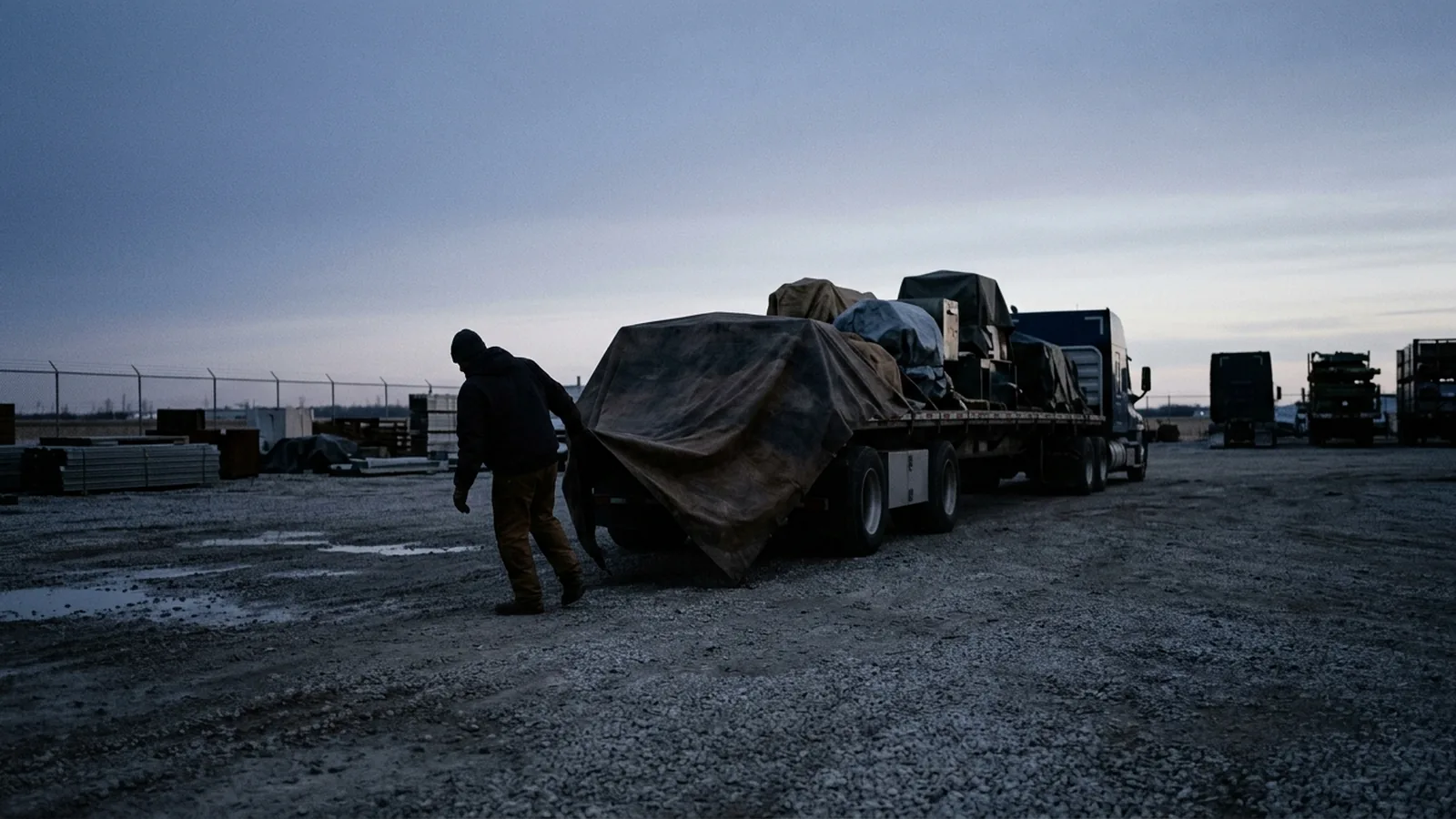
In short.
A flatbed tarp is a consumable: it tears, it gets replaced. What decides how long it lasts
is not the brand on the invoice, it is the fabric weight, the seams and the hardware, and
every one of those is measurable. Pick your family below; each page carries the published
formats, the published reference values and the questions to settle in writing.
| Family | What it covers | Published formats | |
|---|---|---|---|
| Lumber Tarps | Packaged lumber, plywood and tall palletized loads. | 8 published formats, 16 to 28 ft wide, 4 to 10 ft drop published US formats, read 2026-08-20 | See the family → |
| Steel Tarps | Steel plate, beams, pipe and other low flat loads. | 3 published formats, 16 to 24 ft wide, 4 to 8 ft drop published US formats, read 2026-08-20 | See the family → |
| Coil Tarps | Steel coils, shaped to the eye and the curve. | 2 published sizes: 6 x 6 x 6 ft, 7 x 7 x 7 ft published US formats, read 2026-08-20 | See the family → |
| Hay Tarps | Stacked round and square bales stored outside. | 6 published sizes, 15 to 33 ft wide and 33 to 54 ft long, each priced by two vendors published US formats, read 2026-08-20 | See the family → |
Out of scope, by policy: load securement equipment of any kind. A tarp covers a load; what holds the load is a different trade with life-safety ratings we cannot verify, so we do not quote it. Details on the about page.
First personal reply within 2 business days, with clarifying questions or next steps.