Coil tarps sized from your coil and covered shape
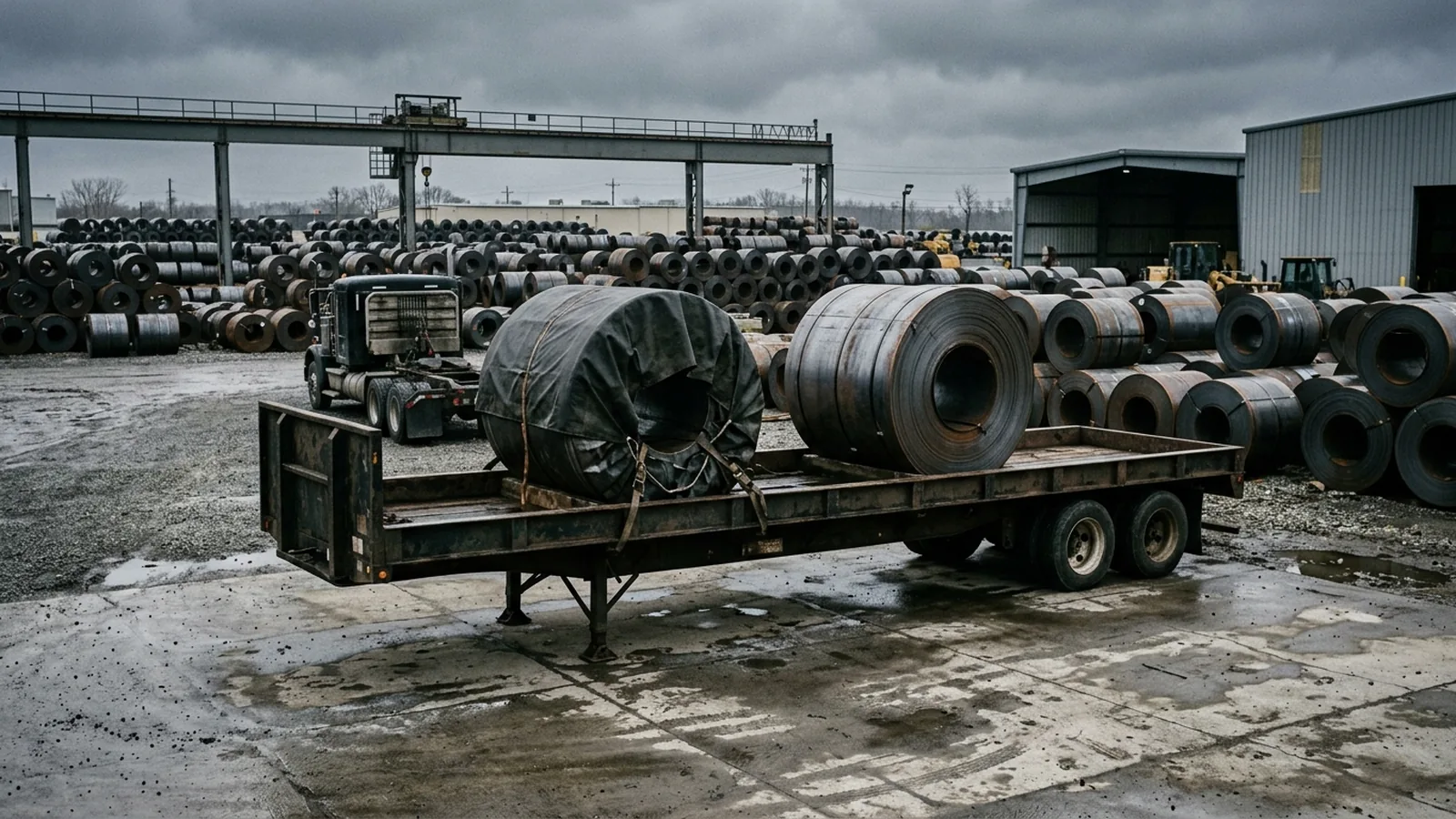
Start with the diameter, axial width and eye direction
Record the actual coil before choosing a published cover reference. A cube label cannot tell a supplier which dimension is which, whether packaging projects beyond the coil, or where openings are needed. Label a sketch instead of sending three unlabeled numbers.
Conceptual illustration. You can pause the movement.
Static view: reduced motion is enabled.Looking into the eye
Looking across the axis
Label the eye orientation
State whether the eye faces a trailer side, the front/rear, or upward. Mark the trailer direction on your own sketch; the two measurement views above do not select a loading orientation.
| Record on the sketch | How to describe it | Keep separate |
|---|---|---|
| Outside diameter | The external coil diameter, with units and any wrapping that changes the covered envelope. | The eye opening is not the outside diameter. |
| Coil width | The distance across the coil along its axis. | The load's height above the trailer deck. |
| Eye orientation | Eye facing the trailer side, facing front/rear, or facing upward; label the trailer direction. | The supplier must confirm how its cover pattern corresponds to that orientation. |
| Covered envelope | The width, length and height of the loaded assembly that the cover must enclose. | Any protection or supports that project outside the bare coil. |
| Opening locations | Mark required cover openings and their positions from a named edge. | Cargo restraint design and ratings are outside our scope. |
Illustrative request: “One coil per cover. Outside diameter 5 ft, coil width 4 ft, eye facing the trailer side. The loaded envelope and opening locations are still to be measured. Please confirm the finished pattern on a drawing.” These numbers are example inputs, not a verified fit for either published cube format.
For recurring fleet work, provide the smallest and largest coil envelopes you intend to cover. Ask whether one pattern covers the range or separate patterns are needed. Do not turn the largest diameter into a universal size while leaving the width and orientation unresolved. A covered envelope is a purchasing input, not a loading instruction.
N2 market example, checked 2026-10-27: the US Cargo Control coil cover listing describes a curved upper shape and lower panels with openings. It supports asking about shape and openings, without proving fit for your coil. The worksheet above is our proposed request method, not a vendor-certified pattern.
Prepare the coil fabric and construction block, then add this labeled geometry in your coil tarp request. The calculator's rectangular drape formula is not a coil pattern generator.
Measure the outside of everything the cover must enclose
The bare coil and the covered assembly are different measurement subjects. Include packaging and protection that project beyond the coil, then record the full envelope. The finished cover shape and any allowances still need supplier confirmation.
Conceptual illustration. You can pause the movement.
Static view: reduced motion is enabled.1. Record the bare coil
Keep outside diameter D, axial width W and eye orientation on the same labeled sketch.
2. Include outer projections
Draw what is actually present. The packaging and protection here are symbolic, with no suggested position or thickness.
3. Describe the full envelope
Give width, length and height with units and named views. An envelope describes the assembly, not the finished cover dimensions.
Put openings and fixing references on the finished drawing
Name the view and its reference edges before describing a position. Keep the same references on the quote, approved sample and reception sheet.
Conceptual illustration. You can pause the movement.
Static view: reduced motion is enabled.Use positions the supplier can check
A and B: agree the reference edges. Name the view, eye orientation and finished edges. A mirrored or different view changes the position description.
x and y: locate the opening. These are variables, not suggested offsets. Add the opening's shape, size, units and finished edge treatment to the approved drawing.
F: link to the fixing schedule. Give every agreed fixing a reference and position. Specify its type, support, stitching and surrounding reinforcement separately.
Confirm all positions, quantities and tolerances for the ordered pattern. A spacing or a sketch does not establish assembly strength.
What must be on the written spec
- Outside diameter, axial width, eye orientation and full covered envelope, with units
- Finished cover views, dimensions, tolerances and opening locations
- Fabric weight per area on each panel; keep complete-piece weight separate
- Panel seams, hems, reinforcement and fixing positions on the same approved drawing
- Agreed sample, inspection method and acceptance criteria
Panel seams and sewn rows are separate construction details. Heat-sealed seams; the D-ring rows are then sewn on. The listing describes abrasion-resistant pads beneath the D-rings. US Cargo Control HCT666-BLK is a published example, checked 2026-10-27.
The description states heat-welded seams, double-lock-stitched hems and nylon webbing reinforcement. Tarps Now CTH666-BLK describes its own offer. Confirm the construction for the ordered cover, rather than transferring another listing's details.
US Cargo Control describes its material as waterproof but the finished tarp as water-resistant because of its grommets and D-rings. This statement belongs to that listing, not every coil cover. Agree the required finished-cover performance and any sample test, including seams and openings, separately.
Published coil cover references
Use the linked size guides for each vendor's cover drawing, listing details and fit questions. The nominal size does not fill in your coil measurements or approve a finished pattern.
Historical US retail prices recorded 2026-08-20. Construction was checked 2026-10-27. The source links open current listings; they are not price archives. These are not our prices or available stock.
| Cover reference | Vendor / listing | Fabric statement | Recorded price |
|---|---|---|---|
| 6 x 6 x 6 ft guide → | US Cargo Control HCT666-BLK · N2 | Sides and top: 18 oz/yd² | 179.99 USD Read 2026-08-20 |
| 6 x 6 x 6 ft guide → | Tarps Now CTH666-BLK · N2 | Top: 18 oz/yd²; side-panel weight to confirm | 200.95 USD Read 2026-08-20 |
| 7 x 7 x 7 ft guide → | US Cargo Control HCT777-BLK · N2 | Sides and top: 18 oz/yd² | 292.00 USD Read 2026-08-20 |
Compare the same finished pattern, panel fabric and included construction. A sourcing quote also depends on quantity, freight and duty. Missing dimensions are asked for, never inferred from this table.
Questions fleets actually ask
Which coil tarp formats are published?
The table above lists every published coil format on file. These are reference sizes, not a substitute for your coil diameter, width and eye orientation. Custom dimensions go on a written dimension sheet before the quote; missing dimensions get asked, never assumed.
Can I just use a steel tarp on a coil?
A flat sheet and a shaped coil cover have different patterns. Loose fabric can flap and abrade, but a cube label or the word coil does not establish fit or service life. Send the outside diameter, axial width, eye orientation and covered envelope, then compare the proposed finished drawings for your loads.
Does a larger published cube size guarantee a fit?
No. A published cover size is not a maximum coil diameter or an internal-clearance specification. Confirm the outside envelope including packaging and protection, the eye orientation, and the proposed finished cover drawing. Any allowance and tolerance must be agreed for the order.
Does waterproof fabric mean a waterproof finished cover?
A fabric property does not establish the performance of seams, fixings or openings. The linked US Cargo Control listing calls its material waterproof but its finished tarp water-resistant. Confirm the required performance of the proposed cover and any agreed sample test separately.
First personal reply within 2 business days, with clarifying questions or next steps.